×
Hero Background
English
Chinese
French
Japanese
Korean
German
Spanish

Anemia Drugs Market Analysis

ID: MRFR/Pharma/1859-HCR
84 Pages
Kinjoll Dey
October 2025

Anemia Drugs Market Size, Growth Research Report By Anemia Type (Iron Deficiency Anemia, Sickle Cell Anemia, Aplastic Anemia, Hemolytic Anemia, Pernicious Anemia and others), by Route of Administration (Oral and Injectable), by Product Type (Biologics and Non-Biologics), End User (Hospitals and Self-Administered) - Competitor Industry Analysis and Trends Forecast Till 2035

Share:
Download PDF ×

We do not share your information with anyone. However, we may send you emails based on your report interest from time to time. You may contact us at any time to opt-out.

Anemia Drugs Market Infographic
Purchase Options

Market Analysis

In-depth Analysis of Anemia Drugs Market Industry Landscape

The market dynamics of anemia drugs reflect a complex interplay of factors, encompassing the prevalence of anemia, advancements in medical treatments, and the competitive landscape within the pharmaceutical industry. Anemia drugs aim to address a condition characterized by a deficiency of red blood cells or hemoglobin, and understanding the market dynamics is crucial for stakeholders involved in the development, manufacturing, and distribution of these therapies. Anemia, the incidence of which both regionally and globally, is a fundamental factor in the direction the market is going. The improvement of the general knowledge about anemia causes and the need to act, as soon as possible, helps to accelerate the increase in the requirement for efficient anemia drugs. The market size of anemia drugs is greatly influenced by the demographic aspect, such as the ageing population of the human race. As the elderly cohort increases, so will the chances of both anemic and related conditions so as to create the dynamics in the pharmaceutical industry that will shape the companies to produce for this demographic. Anexemia could be a product of different initial causes, such as nutritional deficiencies, chronic diseases, and genetic abnormalities. The wide variety of underlying mechanisms of anemia results in the development of multiple products to ease the marketing pulling and pharmaceutical companies that must focus on specific subtypes and causes. Repeated improvement in researches in medicine and the development of production of drugs plays the leading role in the development of medicines for anemia. Novel formulation, delivery techniques and therapeutic approaches increasing the activity and safety of these drugs alter the competition of the market. One of the most important iron deficiency is the cause of anemia and the prevalence of drugs targeting this criterion is still very high. The reasons for many anemia drugs keeping changing because of the widespread iron deficiency anemia and the motion of the iron supplement product. Role of economy, notably healthcare expenditures and finance in market performance, influences market demand. A drug treating anemia has to go through the process of effectiveness and cost determination to allow its availability to those patients who are hard-to-treat. Stringent regulatory standards and approval processes are always the drivers of the market of anemia drugs. A key factor is aregulatory compliance, and successful approvals may be regarded as a determinant of the momentum in product sales by both healthcare professionals and patients.

The globalization of pharmaceutical markets impacts the availability and distribution of anemia drugs. As healthcare infrastructure improves in emerging markets, the demand for anemia treatments increases, influencing market dynamics on a global scale. The anemia drugs market faces challenges such as potential side effects, competition from alternative therapies, and the need for patient education. Mitigating these risks is essential for sustained growth and success in a market that is constantly evolving.

Author
Kinjoll Dey
Research Analyst Level I

He is an extremely curious individual currently working in Healthcare and Medical Devices Domain. Kinjoll is comfortably versed in data centric research backed by healthcare educational background. He leverages extensive data mining and analytics tools such as Primary and Secondary Research, Statistical Analysis, Machine Learning, Data Modelling. His key role also involves Technical Sales Support, Client Interaction and Project management within the Healthcare team. Lastly, he showcases extensive affinity towards learning new skills and remain fascinated in implementing them.

Leave a Comment

FAQs

How big is the Anemia Drugs Market?

Anemia Drugs Market is projected to grow at 8.9% CAGR during the assessment period (2025-2035).

How much is the Anemia Drugs Market worth in the future?

The valuation of the Global Anemia Drugs Market is estimated to increase to 18.95 billion by 2035.

What are the major tailwinds pushing the growth of the Anemia Drugs Market?

Increasing awareness and rising focus on women’s health, Rise in lactating and pregnant women, and Consistent healthcare advancement initiatives and awareness efforts are the major tailwinds pushing the growth of the Global Anemia Drugs Market.

Which region holds the largest share in the Anemia Drugs Market?

North America holds the largest share in the Global Anemia Drugs Market, followed by Europe and the Asia Pacific, respectively.

Who are the top players in the Anemia Drugs Market?

GlaxoSmithKline plc, Amgen Inc., Bluebird bio, GlycoMimetics Inc., Biocon, Regen biopharma Inc., Acceleron Pharma, Bayer AG, and Eli Lilly and company, are some of the major players operating in the anemia drugs market.

Market Summary

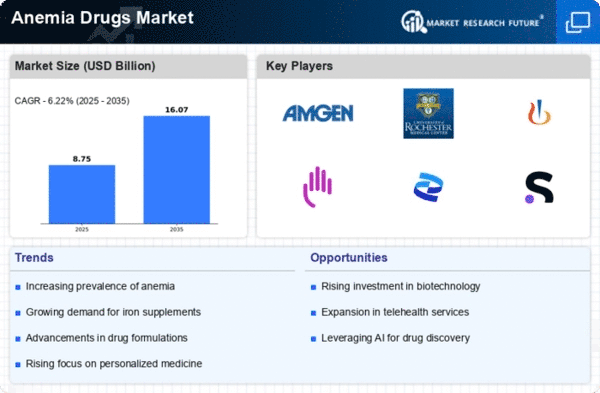
As per MRFR analysis, the Anemia Drugs Market Size was estimated at 8.24 USD Billion in 2024. The Anemia Drugs industry is projected to grow from 8.85 USD Billion in 2025 to 16.07 USD Billion by 2035, exhibiting a compound annual growth rate (CAGR) of 6.22 during the forecast period 2025 - 2035.

Key Market Trends & Highlights

The Anemia Drugs Market is experiencing robust growth driven by increasing awareness and advancements in treatment options.

  • North America remains the largest market for anemia drugs, driven by high healthcare expenditure and advanced medical infrastructure. The Asia-Pacific region is emerging as the fastest-growing market, fueled by rising awareness and improving healthcare access. Iron supplements continue to dominate the market, while erythropoiesis stimulating agents are witnessing the fastest growth due to their targeted therapeutic benefits. Key market drivers include the increasing prevalence of anemia and government initiatives aimed at enhancing preventive healthcare measures.

Market Size & Forecast

2024 Market Size 8.24 (USD Billion)
2035 Market Size 16.07 (USD Billion)
CAGR (2025 - 2035) 6.22%
Largest Regional Market Share in 2024 North America

Major Players

<p><a title="Amgen" href="https://www.amgen.com/newsroom/press-releases/2002/07/fda-approves-amgens-aranesp-for-anemia-associated-with-chemotherapy" target="_blank" rel="noopener">Amgen</a> (US), Roche (CH), Novartis (CH), <a title="Bristol-Myers Squibb" href="https://news.bms.com/news/details/2025/Bristol-Myers-Squibb-Announces-Topline-Results-from-Phase-3-INDEPENDENCE-Trial-for-Reblozyl-luspatercept-aamt-in-Adult-Patients-with-Myelofibrosis-Associated-Anemia/default.aspx" target="_blank" rel="noopener">Bristol-Myers Squibb</a> (US), Pfizer (US), Sanofi (FR), GSK (GB), Horizon Therapeutics (IE), Teva Pharmaceutical Industries (IL)</p>

Market Trends

The Anemia Drugs Market is currently experiencing a dynamic evolution, driven by a confluence of factors that include rising global awareness of anemia and its associated health implications. This condition, characterized by a deficiency in red blood cells or hemoglobin, has garnered increased attention from healthcare providers and patients alike. Consequently, there is a growing demand for effective therapeutic options, which has prompted pharmaceutical companies to invest in research and development. Innovations in drug formulations and delivery methods are emerging, potentially enhancing patient compliance and treatment outcomes. Furthermore, the expansion of healthcare access in developing regions appears to be contributing to the market's growth, as more individuals seek diagnosis and treatment for anemia. In addition to the increasing prevalence of anemia, the Anemia Drugs Market is also influenced by advancements in technology and personalized medicine. The integration of genetic testing and biomarker identification may lead to more tailored treatment approaches, thereby improving efficacy and minimizing adverse effects. Moreover, collaborations between pharmaceutical firms and biotechnology companies are likely to foster the development of novel therapies. As the market continues to evolve, stakeholders must remain vigilant to emerging trends and shifts in consumer preferences, which could shape the future landscape of anemia treatment.

Rising Awareness and Diagnosis

There is a notable increase in awareness regarding anemia, leading to more individuals seeking diagnosis and treatment. This trend is likely to drive demand for anemia drugs, as healthcare providers emphasize the importance of early detection and management.

Technological Advancements in Treatment

Innovations in drug delivery systems and formulations are emerging, potentially enhancing the effectiveness of anemia treatments. These advancements may improve patient adherence and overall treatment outcomes, thereby influencing market dynamics.

Personalized Medicine Approaches

The shift towards personalized medicine is becoming more pronounced, with an emphasis on tailored therapies based on individual patient profiles. This trend may lead to the development of more effective anemia treatments, aligning with the growing demand for customized healthcare solutions.

Anemia Drugs Market Market Drivers

Aging Population

The aging population is a significant driver of the Global Anemia Drugs Market Industry. As individuals age, the risk of developing anemia increases due to various factors, including chronic diseases and nutritional deficiencies. The demographic shift towards an older population is particularly pronounced in developed countries, where the prevalence of anemia among seniors is notably high. This trend necessitates effective treatment options, thereby driving the demand for anemia drugs. Consequently, the Global Anemia Drugs Market Industry is expected to expand as healthcare systems adapt to the needs of an aging population, ensuring access to necessary therapies.

Market Growth Projections

The Global Anemia Drugs Market Industry is poised for substantial growth, with projections indicating a rise from 20.6 USD Billion in 2024 to 52.7 USD Billion by 2035. This growth trajectory reflects a compound annual growth rate of 8.9% from 2025 to 2035. Factors contributing to this expansion include the rising prevalence of anemia, advancements in drug development, and increased healthcare expenditure. Additionally, growing awareness and screening programs, along with the aging population, further bolster market dynamics. These projections underscore the potential for innovation and investment within the anemia drug sector.

Rising Prevalence of Anemia

The increasing prevalence of anemia globally is a primary driver of the Global Anemia Drugs Market Industry. According to the World Health Organization, anemia affects approximately 1.62 billion people worldwide, with women and children being the most affected demographics. This widespread occurrence necessitates effective treatment options, thereby propelling the demand for anemia drugs. As awareness about anemia and its health implications grows, healthcare providers are more likely to prescribe these medications, contributing to the market's expansion. The Global Anemia Drugs Market Industry is projected to reach 20.6 USD Billion in 2024, reflecting the urgent need for effective therapies.

Advancements in Drug Development

Innovations in drug development are significantly influencing the Global Anemia Drugs Market Industry. The introduction of novel therapies, including erythropoiesis-stimulating agents and iron supplements, has enhanced treatment efficacy and patient outcomes. For instance, recent advancements in oral iron formulations have improved absorption rates and reduced gastrointestinal side effects, making them more appealing to patients. These developments not only address the diverse needs of patients but also stimulate market growth. As the industry evolves, it is anticipated that the Global Anemia Drugs Market Industry will experience a compound annual growth rate of 8.9% from 2025 to 2035, driven by these advancements.

Increasing Healthcare Expenditure

Rising healthcare expenditure across various regions is a crucial factor driving the Global Anemia Drugs Market Industry. Governments and private sectors are investing more in healthcare, leading to improved access to anemia treatments. For example, countries with robust healthcare systems are allocating significant budgets for anemia management programs, which include drug therapies. This trend is particularly evident in developing nations, where initiatives to combat anemia are gaining momentum. As healthcare spending continues to rise, the demand for anemia drugs is expected to increase, contributing to the market's projected growth to 52.7 USD Billion by 2035.

Growing Awareness and Screening Programs

The growing awareness of anemia and the implementation of screening programs are pivotal in shaping the Global Anemia Drugs Market Industry. Public health campaigns aimed at educating populations about anemia's symptoms and risks have led to increased diagnosis rates. Screening initiatives, particularly in high-risk groups such as pregnant women and children, facilitate early detection and treatment. This proactive approach not only improves health outcomes but also drives the demand for anemia medications. As awareness continues to expand, the Global Anemia Drugs Market Industry is likely to see sustained growth, reflecting the importance of early intervention.

Market Segment Insights

By Drug Type: Iron Supplements (Largest) vs. Erythropoiesis Stimulating Agents (Fastest-Growing)

<p>The 'Drug Type' segment of the Anemia Drugs Market is primarily dominated by Iron Supplements, which hold the largest market share due to their widespread use in treating iron-deficiency anemia. This segment outperforms others as it caters not only to the dietary needs of various populations but also benefits from the growing awareness regarding iron-rich diets. Meanwhile, Erythropoiesis Stimulating Agents are maintaining a notable presence as well, appealing to patients with <a title="chronic kidney disease" href="https://www.marketresearchfuture.com/reports/chronic-kidney-disease-market-5744" target="_blank" rel="noopener">chronic kidney disease</a> and other underlying conditions that require stimulating red blood cell production. Growth trends for this segment indicate a rising preference for Erythropoiesis Stimulating Agents, which are expected to register the fastest growth due to an increased understanding of their therapeutic benefits in managing anemia associated with chronic illnesses. The continued emphasis on effective patient management and personalized approaches to anemia treatment further propels the adoption of these agents. Market dynamics, including aging populations and a higher prevalence of anemia-related disorders, are anticipated to significantly influence the demand for all drug types within this segment.</p>

<p>Iron Supplements (Dominant) vs. Folic Acid Supplements (Emerging)</p>

<p>Iron Supplements are recognized as the dominant player in the Anemia Drugs Market, largely due to their proven efficacy in treating iron deficiency and their acceptance among healthcare professionals. They are often the first line of treatment prescribed for individuals diagnosed with iron-deficiency anemia. In contrast, <a title="Folic Acid" href="https://www.marketresearchfuture.com/reports/folic-acid-market-32688" target="_blank" rel="noopener">Folic Acid</a> Supplements represent an emerging segment, gaining traction particularly among pregnant women and those with nutritional deficiencies. While still in the growth phase, Folic Acid Supplements are increasingly being integrated into anemia management strategies due to their vital role in red blood cell formation and the prevention of neural tube defects. The distinct benefits of these supplements, alongside rising health consciousness, will likely enhance their market standing.</p>

By Administration Route: Oral (Largest) vs. Intravenous (Fastest-Growing)

<p>In the Anemia Drugs Market, the administration routes are primarily categorized into Oral, Intravenous, and Subcutaneous. Oral administration holds the largest market share, being favored for its convenience and ease of use. It caters to a wide demographic and is preferred for long-term treatment plans. Conversely, Intravenous administration, although having a smaller share, is recognized for its rapid action and is primarily used in acute settings or for patients unable to tolerate oral medications. Subcutaneous is also notable, primarily used for certain anemia therapies, though it remains less preferred compared to its counterparts.</p>

<p>Administration Route: Oral (Dominant) vs. Intravenous (Emerging)</p>

<p>The Oral administration route for anemia drugs remains dominant in the market due to its patient-friendly application and the ability to be self-administered. Patients appreciate the convenience of taking pills, which enhances adherence to treatment. Conversely, the Intravenous route is emerging rapidly due to its effectiveness in delivering medication directly into the bloodstream, providing quick therapeutic effects. This route is particularly appealing in hospital settings or for patients with severe forms of anemia who need immediate relief. Both segments are vital, with Oral leading in patient preference, while Intravenous is experiencing heightened demand driven by advancements in treatment protocols and clinical efficacy.</p>

By Patient Demographics: Adult (Largest) vs. Geriatric (Fastest-Growing)

<p>In the Anemia Drugs Market, the Adult demographic holds the largest share, primarily due to the prevalence of anemia in this age group stemming from various chronic conditions and dietary deficiencies. Pediatric and Pregnant Women segments also contribute significantly, but they represent a smaller portion of the overall market. Geriatric patients are increasingly recognized, and their share is expanding as awareness about anemia among aging populations rises, leading to increased diagnoses and treatment.</p>

<p>Adult (Dominant) vs. Geriatric (Emerging)</p>

<p>The Adult segment is characterized by its dominance in the Anemia Drugs Market, encompassing a diverse range of conditions that lead to anemia such as chronic kidney disease, inflammatory disorders, and nutritional deficiencies. This segment benefits from a well-established pipeline of drugs, with consistent demand driven by treatment for comorbid conditions. In contrast, the Geriatric segment is emerging rapidly, propelled by the aging global population and higher rates of anemia diagnoses. This demographic often requires tailored treatments due to comorbidities and polypharmacy, presenting unique challenges and opportunities for drug developers targeting this fast-growing market.</p>

By Indication: Iron Deficiency Anemia (Largest) vs. Anemia of Chronic Disease (Fastest-Growing)

<p>In the Anemia Drugs Market, the segmentation by indication reveals distinct distribution among various types of anemia. Iron Deficiency Anemia stands as the largest segment, dominating the market due to its widespread prevalence across diverse populations. Conversely, Anemia of Chronic Disease is emerging as a significant segment, gaining traction attributable to rising awareness among healthcare providers about chronic conditions associated with anemia.</p>

<p>Iron Deficiency Anemia (Dominant) vs. Aplastic Anemia (Emerging)</p>

<p>Iron Deficiency Anemia is characterized by a high incidence rate, particularly in populations at risk such as women and children. Its treatment options are extensive, making it a staple in the anemia drug market. On the other hand, Aplastic Anemia, though rarer, represents a growing area of concern in hematology, often requiring targeted therapies. As research advances, new treatment avenues for Aplastic Anemia are being explored, which could enhance its market share. The contrast in prevalence and treatment availability between these two segments illustrates the dynamic nature of the anemia drug landscape.</p>

Get more detailed insights about Anemia Drugs Market Research Report- Forecast to 2035

Regional Insights

North America : Market Leader in Anemia Drugs

North America continues to lead the Anemia Drugs Market, holding a significant share of 4.5 billion in 2024. The growth is driven by increasing prevalence of anemia, advancements in drug formulations, and supportive regulatory frameworks. The demand for innovative therapies is further fueled by rising healthcare expenditures and a focus on improving patient outcomes. Regulatory bodies are actively promoting research and development, enhancing market dynamics. The competitive landscape in North America is robust, featuring key players such as Amgen, Pfizer, and Bristol-Myers Squibb. These companies are investing heavily in R&D to develop novel therapies that address unmet medical needs. The U.S. market is particularly strong, supported by a well-established healthcare infrastructure and a high level of awareness regarding anemia treatment options. This region's market is expected to maintain its leadership position through continuous innovation and strategic partnerships.

Europe : Emerging Market with Growth Potential

Europe's Anemia Drugs Market is valued at 2.5 billion, reflecting a growing demand for effective treatments. The region benefits from a strong regulatory environment that encourages the development of new therapies. Increasing awareness of anemia and its health implications, along with rising healthcare investments, are key drivers of market growth. Additionally, initiatives aimed at improving patient access to treatments are expected to further boost demand in the coming years. Leading countries in this region include Germany, France, and the UK, where major pharmaceutical companies like Roche and Novartis are actively involved. The competitive landscape is characterized by a mix of established players and emerging biotech firms, all striving to innovate and capture market share. The European Medicines Agency (EMA) plays a crucial role in regulating and approving new anemia treatments, ensuring safety and efficacy for patients.

Asia-Pacific : Rapidly Growing Market Segment

The Asia-Pacific region, with a market size of 1.8 billion, is witnessing rapid growth in the Anemia Drugs Market. Factors such as increasing population, rising healthcare awareness, and government initiatives to combat anemia are driving demand. The region's diverse healthcare landscape presents both challenges and opportunities, with varying levels of access to treatment across countries. Regulatory support for innovative therapies is also enhancing market potential. Countries like China and India are at the forefront of this growth, with significant investments in healthcare infrastructure and pharmaceutical development. Key players, including Teva Pharmaceutical Industries and Sanofi, are expanding their presence in these markets. The competitive landscape is evolving, with local companies emerging alongside global giants, creating a dynamic environment for innovation and collaboration.

Middle East and Africa : Untapped Market with Challenges

The Middle East and Africa (MEA) region, with a market size of 0.44 billion, presents an untapped opportunity in the Anemia Drugs Market. The growth is hindered by challenges such as limited healthcare access, varying levels of awareness, and economic constraints. However, increasing government initiatives to address anemia and improve healthcare infrastructure are expected to drive market growth. The region's diverse demographics necessitate tailored approaches to treatment and awareness campaigns. Leading countries in this region include South Africa and the UAE, where efforts are being made to enhance healthcare access and treatment options. The competitive landscape is gradually evolving, with both local and international players seeking to establish a foothold. Companies like GSK and Horizon Therapeutics are exploring partnerships to expand their reach and address the unique needs of the MEA market.

Key Players and Competitive Insights

The Anemia Drugs Market is characterized by a dynamic competitive landscape, driven by increasing prevalence of anemia globally and a growing emphasis on innovative treatment options. Key players such as Amgen (US), Roche (CH), and Novartis (CH) are strategically positioned to leverage their extensive research capabilities and established market presence. Amgen (US) focuses on biopharmaceutical innovations, while Roche (CH) emphasizes personalized medicine, and Novartis (CH) is committed to expanding its portfolio through strategic acquisitions and partnerships. Collectively, these strategies foster a competitive environment that prioritizes innovation and patient-centric solutions.

In terms of business tactics, companies are increasingly localizing manufacturing to enhance supply chain efficiency and reduce costs. The market structure appears moderately fragmented, with several players vying for market share. However, the influence of major companies is substantial, as they set trends in product development and market strategies, thereby shaping the overall competitive dynamics.

In November 2025, Amgen (US) announced a collaboration with a leading biotechnology firm to develop a novel erythropoiesis-stimulating agent aimed at treating chronic kidney disease-related anemia. This strategic partnership is likely to enhance Amgen's product pipeline and reinforce its position in the anemia treatment segment, reflecting a broader trend towards collaborative innovation in the industry.

In October 2025, Roche (CH) launched a new digital health platform designed to monitor patients with anemia more effectively. This initiative not only aligns with Roche's commitment to personalized medicine but also indicates a shift towards integrating technology in patient management, potentially improving treatment outcomes and patient adherence.

In September 2025, Novartis (CH) completed the acquisition of a smaller biotech company specializing in anemia therapies. This move is expected to bolster Novartis's capabilities in developing targeted therapies, thereby enhancing its competitive edge in the anemia drugs market. Such acquisitions are indicative of a trend where larger firms seek to augment their portfolios through strategic buyouts, thereby accelerating innovation.

As of December 2025, current competitive trends in the Anemia Drugs Market include a pronounced focus on digitalization, sustainability, and the integration of artificial intelligence in drug development. Strategic alliances are increasingly shaping the landscape, as companies recognize the value of collaboration in driving innovation. Looking ahead, competitive differentiation is likely to evolve from traditional price-based competition to a focus on technological advancements, innovative therapies, and reliable supply chains, underscoring the importance of adaptability in a rapidly changing market.

Key Companies in the Anemia Drugs Market market include

Industry Developments

  • The key players are creating awareness for the anemia drugs market. Child nutrition deficiency at home is the major cause of anemia.  
  • This program helps parents to provide and identify nutritious foods.  
  • The key p0layers in the US are making several market acquisitions that will lead to high developments in the market. 


Future Outlook

Anemia Drugs Market Future Outlook

<p>The Anemia Drugs Market is projected to grow at a 6.22% CAGR from 2024 to 2035, driven by increasing prevalence of anemia, advancements in drug formulations, and rising healthcare expenditure.</p>

New opportunities lie in:

  • <p>Development of personalized anemia treatment plans leveraging genetic profiling.</p>
  • <p>Expansion of telehealth services for anemia management and patient education.</p>
  • <p>Investment in AI-driven drug discovery platforms targeting anemia therapies.</p>

<p>By 2035, the Anemia Drugs Market is expected to achieve substantial growth, reflecting evolving healthcare dynamics.</p>

Market Segmentation

Anemia Drugs Market Drug Type Outlook

  • Iron Supplements
  • Erythropoiesis Stimulating Agents
  • Vitamin B12 Supplements
  • Folic Acid Supplements

Anemia Drugs Market Indication Outlook

  • Iron Deficiency Anemia
  • Anemia of Chronic Disease
  • Aplastic Anemia
  • Hemolytic Anemia

Anemia Drugs Market Administration Route Outlook

  • Oral
  • Intravenous
  • Subcutaneous

Anemia Drugs Market Patient Demographics Outlook

  • Pediatric
  • Adult
  • Geriatric
  • Pregnant Women

Report Scope

MARKET SIZE 2024 8.24(USD Billion)
MARKET SIZE 2025 8.85(USD Billion)
MARKET SIZE 2035 16.07(USD Billion)
COMPOUND ANNUAL GROWTH RATE (CAGR) 6.22% (2024 - 2035)
REPORT COVERAGE Revenue Forecast, Competitive Landscape, Growth Factors, and Trends
BASE YEAR 2024
Market Forecast Period 2025 - 2035
Historical Data 2019 - 2024
Market Forecast Units USD Billion
Key Companies Profiled Amgen (US), Roche (CH), Novartis (CH), Bristol-Myers Squibb (US), Pfizer (US), Sanofi (FR), GSK (GB), Horizon Therapeutics (IE), Teva Pharmaceutical Industries (IL)
Segments Covered Drug Type, Administration Route, Patient Demographics, Indication
Key Market Opportunities Emerging biologics and personalized medicine are reshaping treatment paradigms in the Anemia Drugs Market.
Key Market Dynamics Rising demand for innovative anemia therapies drives competitive dynamics and regulatory adaptations in the anemia drugs market.
Countries Covered North America, Europe, APAC, South America, MEA

FAQs

How big is the Anemia Drugs Market?

Anemia Drugs Market is projected to grow at 8.9% CAGR during the assessment period (2025-2035).

How much is the Anemia Drugs Market worth in the future?

The valuation of the Global Anemia Drugs Market is estimated to increase to 18.95 billion by 2035.

What are the major tailwinds pushing the growth of the Anemia Drugs Market?

Increasing awareness and rising focus on women’s health, Rise in lactating and pregnant women, and Consistent healthcare advancement initiatives and awareness efforts are the major tailwinds pushing the growth of the Global Anemia Drugs Market.

Which region holds the largest share in the Anemia Drugs Market?

North America holds the largest share in the Global Anemia Drugs Market, followed by Europe and the Asia Pacific, respectively.

Who are the top players in the Anemia Drugs Market?

GlaxoSmithKline plc, Amgen Inc., Bluebird bio, GlycoMimetics Inc., Biocon, Regen biopharma Inc., Acceleron Pharma, Bayer AG, and Eli Lilly and company, are some of the major players operating in the anemia drugs market.

  1. Introduction
    1. Definition
    2. Scope of Study
    3. Research Objective
    4. Assumptions & Limitations
    5. Market Structure
  2. Research Methodology
    1. Research Process
    2. Primary Research
    3. Secondary Research
  3. Market Dynamics
    1. Drivers
    2. Restraints
    3. Opportunities
    4. Challenges
    5. Macroeconomic Indicators
  4. Market Factor Analysis
    1. Porter’s five forces model
      1. Bargaining Power of suppliers
      2. Bargaining Power of Customer
      3. Intensity of Competitor’s
      4. Threat of New Entrants
  5. Global Anemia Drugs Market, by Anemia Type
    1. Introduction
    2. Iron deficiency anemia
    3. Sickle Cell Anemia
    4. Aplastic Anemia
    5. Hemolytic anemia
    6. Pernicious Anemia
    7. Others
  6. Global Anemia Drugs Market, By Route of Administration
    1. Introduction
    2. Oral
    3. Injectable
  7. Global Anemia Drugs Market, By Product Type
    1. Introduction
    2. Biologics
    3. Non-biologics
  8. Global Anemia Drugs Market, By End User
    1. Introduction
    2. Hospital
    3. Self-administered
    4. Others
  9. Global Anemia Drugs market, by Regions
    1. Introduction
      1. Americas
      2. Europe
      3. Asia Pacific
      4. Middle East & Africa
  10. Company Landscape
    1. Introduction
      1. Mergers Acquisitions
      2. Collaborations
      3. Release/New Product Launches
      4. Other (Expansion, Updates, Partnership)
  11. Company Profile
    1. Amgen Inc.
      1. Company Overview
      2. Product/Business Segment Overview
      3. Financials
      4. Key Developments
      5. SWOT Analysis
    2. GlaxoSmithKline plc
      1. Overview
      2. Product/Business Segment Overview
      3. Financials
      4. Key Developments
      5. SWOT Analysis
    3. Bluebird bio
      1. Overview
      2. Product/Business Segment Overview
      3. Financials
      4. Key Developments
      5. SWOT Analysis
    4. Biocon
      1. Overview
      2. Product/Business Segment Overview
      3. Financials
      4. Key Developments
      5. SWOT Analysis
    5. GlycoMimetics Inc.
      1. Overview
      2. Product/Business Segment Overview
      3. Financials
      4. Key Developments
      5. SWOT Analysis
    6. Regen biopharma Inc.
      1. Overview
      2. Product/Business Segment Overview
      3. Financials
      4. Key Developments
      5. SWOT Analysis
    7. Bayer AG
      1. Overview
      2. Product/Business Segment Overview
      3. Financials
      4. Key Developments
      5. SWOT Analysis
    8. Acceleron Pharma
      1. Overview
      2. Product/Business Segment Overview
      3. Financials
      4. Key Developments
      5. SWOT Analysis
    9. Eli Lilly and company
      1. Overview
      2. Product/Business Segment Overview
      3. Financials
      4. Key Developments
      5. SWOT Analysis
    10. Others
      1. Overview
      2. Product/Business Segment Overview
      3. Financials
      4. Key Developments
      5. SWOT Analysis
  12. Others
  13. Appendix
    1. List of Tables
  14. GLOBAL ANEMIA DRUGS MARKET, 2020-2027 (USD MILLION)
  15. GLOBAL ANEMIA DRUGS MARKET, BY ANEMIA TYPE, 2020-2027 (USD MILLION)
  16. GLOBAL ANEMIA DRUGS MARKET, BY ROUTE OF ADMINISTRATION, 2020-2027 (USD MILLION)
  17. GLOBAL ANEMIA DRUGS MARKET, BY PRODUCT TYPE, 2020-2027 (USD MILLION)
  18. GLOBAL ANEMIA DRUGS MARKET, BY END USER, 2020-2027 (USD MILLION)
  19. GLOBAL ANEMIA DRUGS MARKET, BY REGION, 2020-2027 (USD MILLION)
    1. List of Figures
  20. RESEARCH PROCESS
  21. PORTERS FIVE FORCES MODEL
  22. GLOBAL ANEMIA DRUGS MARKET, BY ANEMIA TYPE
  23. GLOBAL ANEMIA DRUGS MARKET, BY ROUTE OF ADMINISTRATION
  24. GLOBAL ANEMIA DRUGS MARKET, BY PRODUCT TYPE
  25. GLOBAL ANEMIA DRUGS MARKET, BY END USER
  26. GLOBAL ANEMIA DRUGS MARKET, BY REGION
  27. GLOBAL ANEMIA DRUGS MARKET: COMPANY SHARE ANALYSIS, 2020 (%)

Anemia Drugs Market Segmentation

Market Segmentation Overview

  • Detailed segmentation data will be available in the full report
  • Comprehensive analysis by multiple parameters
  • Regional and country-level breakdowns
  • Market size forecasts by segment
Infographic

Free Sample Request

Kindly complete the form below to receive a free sample of this Report

Get Free Sample

Customer Strories

Compare Licence

×
Features License Type
Single User Multiuser License Enterprise User
Price $4,950 $5,950 $7,250
Maximum User Access Limit 1 User Upto 10 Users Unrestricted Access Throughout the Organization
Free Customization
Direct Access to Analyst
Deliverable Format
Platform Access
Discount on Next Purchase 10% 15% 15%
Printable Versions