Report Details:
15 Companies Covered
128 Pages
Pune, India, January 18, 2019 /MRFR Press Release/- Market Research Future published a half-cooked research report on Global Wireless Electric Vehicle Charging Market. The Global Wireless Electric Vehicle Charging Market is expected to witness ~20.11% CAGR during the period, 2025 to 2035.
Wireless Electric Vehicle Charging Market Highlights
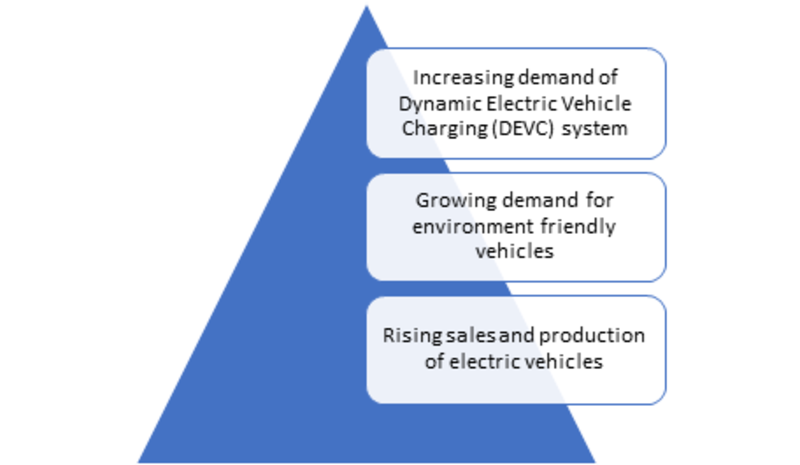
The wireless electric vehicle charging uses the inductive charging system to charge electric vehicle batteries. Electromagnetic induction is used to transfer power between the source and receiver. Growing popularity of electric vehicles due to attractive incentives and subsidies by governing bodies and improving infrastructure for electric vehicles, particularly in emerging countries, is expected to be one of the key factors driving the market over the forecast period.
The increasing production of electric vehicle from countries such as China, Germany, Norway, and Japan drive the growth of wireless electric vehicle charging market. Furthermore, technological advancement, growing awareness from the key manufacturers in reducing the carbon footprints, low maintenance cost of this system, and the incentives and subsidies provided by governments from various countries for the setup of electric vehicle charging stations are set to drive the growth of this market during the study period.
Browse In-depth Details [Table of Content, List of Figures, List of Tables] of Global Wireless Electric Vehicle Charging market
Drivers: Wireless Electric Vehicle Charging
Market Research Analysis
In terms of region, the global market for wireless electric vehicle charging is segmented into North America, Europe, Asia-Pacific, and the Rest of the World. The Asia-Pacific region is estimated to hold the largest market share over the forecast period owing to growing production of electric vehicles in China and Japan. Increased production and sales of automobiles is expected to boost the demand for wireless electric vehicle charging market in this region. Furthermore, the growing disposable income from countries such as China, India and other countries, and increasing population, urbanization, and rising focus to reduce the vehicle emissions.
North America is estimated to grow at a steady rate in the wireless electric vehicle charging market during forecast period owing to growing demand for environment friendly vehicles. Presence of key playes such as Plugless Power, WiTricity, Qualcomm, Inc., and HEVO power in this region are contributing to the growth of this market. Moreover, increased production and sales of electric vehicles is expected to drive the growth in this region.
Scope of the Report
This study provides an overview of the global wireless electric vehicle charging market, tracking four market segments across four geographic regions. The report studies key players, providing a five-year annual trend analysis that highlights market size, volume, and share for North America, Europe, Asia-Pacific, and the Rest of the World. The report also provides a forecast, focusing on the market opportunities for the next five years for each region. The scope of the study segments the global wireless electric vehicle charging market by material, type, transmission, vehicle type, sales channel and regions.
- By Charging Point
- Dynamic Electric Vehicle Charging
- Stationary Electric Vehicle Charging
- By Power Supply Range
- 3 to <7.7 KW
- 7 to < 11KW
- 11to < 20KW
- 20 to < 50 KW
- 50 KW and Above
- By Charging Station
- Commercial Charging Station
- Home Charging Station
- By Charging Pads
- Base Charging Pads
- Power Control Unit
- Vehicle Charging Pads
- By Propulsion
- Battery Electric Vehicle
- Plug-In Electric Vehicle
- By Vehicle Type
- Passenger Electric Vehicle
- Commercial Electric Vehicle
- By Application
- OEM
- Aftermarket
- By Regions
- North America
- Asia-Pacific
- Europe
- Rest of the World
Key Players
The prominent players in the global wireless electric vehicle charging market market include Plugless Power (USA), WiTricity (USA), Nission (Japan), Qualcomm, Inc. (USA), ZTE Corporation (China), ELIX Wireless (Canada), HEVO power (USA), Continental AG (Germany), Toshiba Corporation (Japan), and BMW (Germany).